If you've ever stood on the side of a flatbed tightening strap after strap, you already know this: not all ratchet straps feel the same.
A strap can have the right rating on paper and still be a pain to work with. Maybe the webbing is stiff and difficult to feed through the ratchet. Maybe the handle doesn't give you enough leverage. Or maybe the hook just doesn't cooperate with your trailer's anchor points.
When you're securing loads for a living, those little frustrations add up.
The right ratchet strap should give you the strength you need while making the job as straightforward as possible. Here's what flatbed drivers should look for when choosing ratchet straps for everyday load securement.
What Makes a Ratchet Strap Easy to Use?
When drivers talk about equipment being "easy to use," they're usually talking about more than one thing. After 25 years in the trucking industry, we've learned that a good ratchet strap should work with you, not against you.
At Tarpstop, we work with flatbed drivers who use our load securement equipment day in and day out. One thing we hear repeatedly is that ease of use matters just as much as the specifications on the label. When you're securing multiple loads every week, a ratchet strap that's straightforward to operate and manageable in your hands can make a real difference. So, what do seasoned drivers look for when they're shopping for easy ratchet straps to replace their worn out gear?
A smooth-operating ratchet
The ratchet is the part you're going to handle over and over again, so its design matters.
A good ratchet should operate smoothly, engage easily and release without a fight. The handle should provide enough leverage to tension the strap without making you work harder than necessary.
That becomes especially important when you're securing multiple straps on a load.
One strap isn't the whole job. Think about what happens when you're working with 10, 15 or even more.
A ratchet that feels good in your hand can make a long morning of load securement a whole lot easier.
Tough but manageable webbing
Strength matters, but so does handling.
If you've ever wrestled with a stiff, twisted strap on a cold morning, you know exactly what we're talking about.
Look for webbing that's durable enough for the demands of flatbed work but still manageable when you're feeding it through the ratchet, positioning it over a load or working with gloves on.
The right hook for your trailer
There's no single hook that's right for every flatbed application.
The best choice depends on your trailer, anchor points, and the way you typically secure your loads. Choose a hook configuration that connects securely and works naturally with your equipment.
If you're fighting to get the hook where it needs to go, you're starting the job with an unnecessary headache.
The right strap length
Longer isn't automatically better.
A strap needs to be long enough to accommodate the load and trailer configuration without leaving you with a pile of excess webbing to deal with.
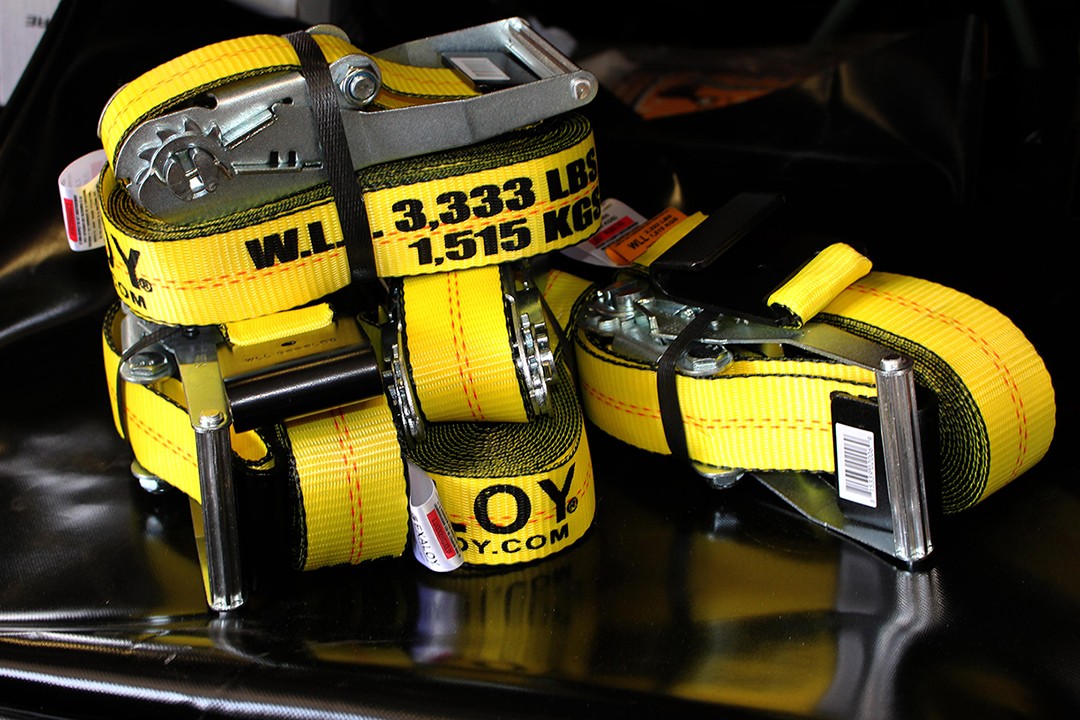
For many flatbed applications, 4-inch by 30-foot ratchet straps offer a versatile combination of size and length. They provide plenty of reach for a variety of loads while remaining practical to handle.
The right length ultimately depends on the loads you haul and how your trailer is configured.
A clearly marked Working Load Limit
Here's one specification you don't want to overlook.
When choosing cargo securement equipment, pay attention to the Working Load Limit (WLL).
The WLL is not the same thing as breaking strength. Breaking strength refers to the force at which a strap may fail under testing. The WLL is the manufacturer's rated limit for working use.
Don't choose a strap simply because it has a big number attached to it. Make sure the equipment's WLL is appropriate for the load and securement application.
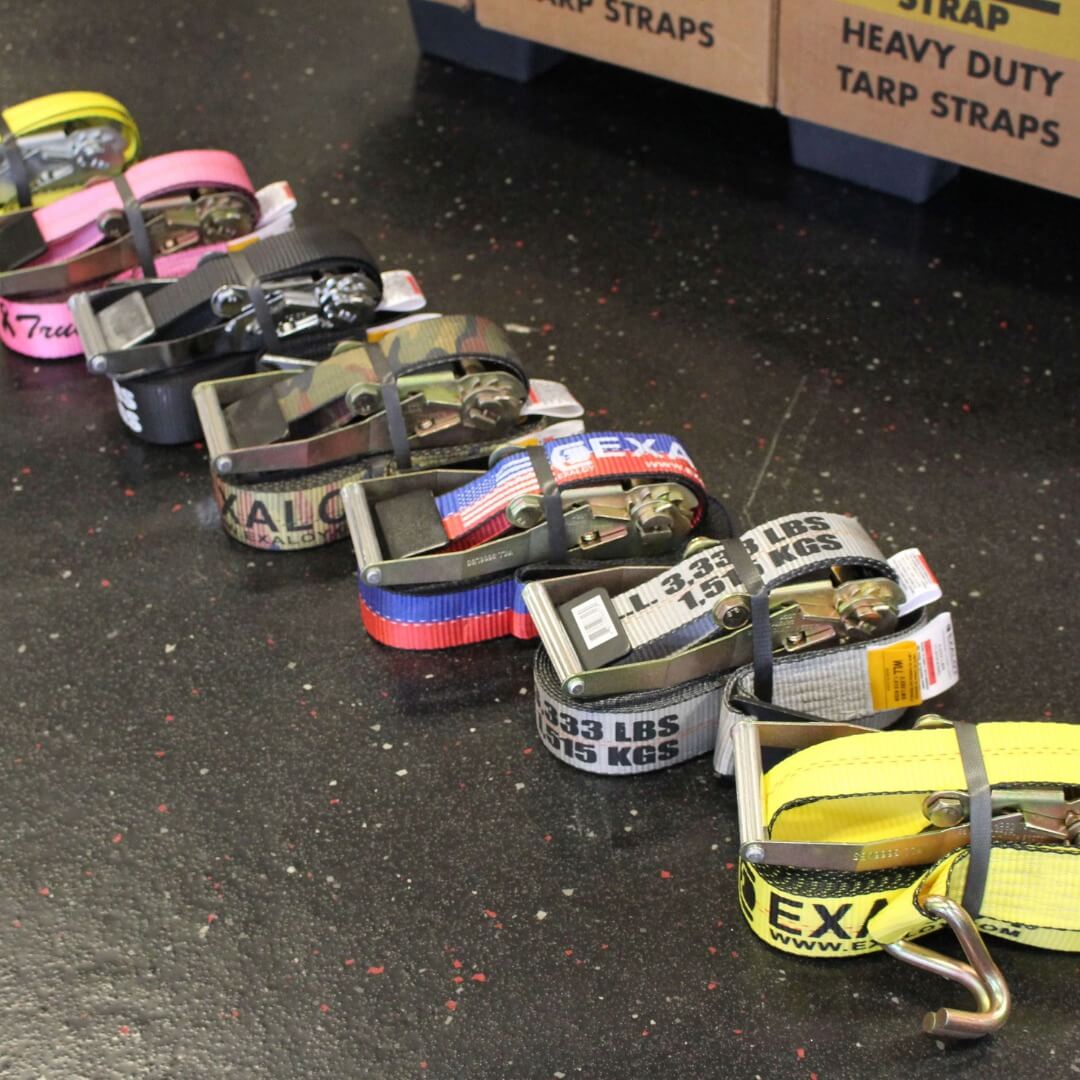
What Size Ratchet Straps Do Flatbed Truckers Use?
Four-inch ratchet straps are a common choice for heavy-duty flatbed load securement.
Why? The wider webbing provides the strength and durability drivers expect for demanding applications while still being practical to handle every day.
A 4" x 30' ratchet strap is a particularly versatile option for many flatbed applications. The 30-foot length gives drivers flexibility when working around different loads, while the 4-inch webbing is well suited to heavy-duty cargo securement.
The important thing is to match the strap to the job. Consider the load, trailer, anchor points, required Working Load Limit and applicable cargo-securement requirements before choosing your equipment.
Are Some Ratchet Straps Easier to Use Than Others?
Absolutely.
Two ratchet straps can look very similar on the shelf and feel completely different once you put them to work.
The differences can come down to:
-
Ratchet handle design
-
Ease of release
-
Webbing flexibility
-
Spool design
-
Hook configuration
-
Strap length
These features don't replace the basic requirements for safe load securement. But once you've narrowed your choices down to equipment that meets those requirements, ease of use matters.
And it matters even more when you're using the same equipment every day.
What Should You Avoid When Buying Ratchet Straps?
Price is important. But when it comes to load securement, it shouldn't be the only thing you're looking at.
Be cautious about straps that don't provide clear information about their Working Load Limit or manufacturer. Pay attention to the quality of the hardware and webbing, too.
Watch for damaged webbing
Before using a strap, inspect it for:
-
Cuts or tears
-
Excessive abrasion or fraying
-
Heat or burn damage
-
Chemical damage
-
Damaged or broken stitching
-
Damaged hooks
-
Bent or malfunctioning ratchets
A strap is only as dependable as its condition.
Don't take chances with equipment that's responsible for keeping your load where it belongs.
When Should You Replace a Ratchet Strap?
There isn't a magic number of loads that automatically makes a strap unsafe. Its condition is what matters.
If the webbing, stitching, hooks, ratchet or other components show damage that could affect the strap's ability to safely secure a load, it's time to take it out of service.
Follow the manufacturer's recommendations and applicable cargo-securement regulations when inspecting equipment and determining whether it remains suitable for use.
When in doubt, don't gamble with a piece of equipment that's doing an important job.
Are 4-Inch Ratchet Straps Better Than 2-Inch Ratchet Straps?
Not necessarily.
The right strap depends on the application, the load, the required Working Load Limit and applicable securement requirements.
Four-inch straps are commonly used in heavy-duty flatbed applications because of their construction and capacity. Smaller straps can be appropriate for other applications.
The goal isn't to find the biggest strap you can buy.
The goal is to use the right equipment for the job.
Why 4" x 30' Ratchet Straps Are a Practical Choice for Flatbeds
For drivers who want a versatile strap for everyday flatbed work, 4" x 30' is a practical combination.
Plenty of reach
A 30-foot strap provides flexibility when working with different load sizes and configurations.
Heavy-duty webbing
Four-inch webbing is well suited to the demands of serious cargo securement and the day-to-day work that comes with flatbed trucking.
Practical for everyday use
When you're securing loads day after day, you want equipment that isn't unnecessarily complicated. A ratchet strap should be straightforward to handle, tension and release.
Tarpstop offers 4" x 30' ratchet straps for drivers looking for dependable cargo-securement equipment for their flatbed applications.
Shop 4" x 30' Ratchet Straps →
Choosing the Right Ratchet Strap for Your Flatbed
Before you buy your next set of ratchet straps, think about how you'll actually use them.
Consider:
-
Working Load Limit: Is it appropriate for your application?
-
Strap width: Does it provide the capacity and durability you need?
-
Length: Is it long enough for your typical loads?
-
Hook configuration: Does it work with your trailer's anchor points?
-
Ratchet design: Is it comfortable and straightforward to operate?
-
Webbing: Is it durable while still being manageable?
-
Trailer and load: Does the equipment fit the job?
-
Condition: Are your existing straps still in good shape?
The best ratchet straps aren't necessarily the ones with the biggest number on the label or the lowest price on the shelf.
It's the ones that gives you the capacity you need, holds up to the work and doesn't make your job harder than it has to be.
When you're securing a load, every strap matters. Choose equipment you can count on from the first strap to the last.
Bottom Line
For many flatbed applications, a 4" x 30' ratchet strap is a practical, versatile choice. Look beyond the size and price, though. Working Load Limit, hook configuration, webbing quality and ease of use all matter when you're securing loads day after day.
Frequently Asked Questions
What is the best size ratchet strap for a flatbed truck?
Four-inch ratchet straps are a common choice for heavy-duty flatbed load securement. The appropriate strap depends on the load, required Working Load Limit, trailer configuration and applicable securement requirements.
What length ratchet straps do flatbed truckers use?
Thirty-foot ratchet straps are a versatile choice for many flatbed applications. The appropriate length depends on the size and configuration of the load and trailer.
What makes a ratchet strap easy to use?
A smooth-operating ratchet, manageable webbing, an appropriately designed handle, the right hook configuration and a suitable strap length can all make a ratchet strap easier to use.
How do I know if a ratchet strap is strong enough?
Check the manufacturer's Working Load Limit and make sure it meets the requirements for your specific load and securement application. Don't rely solely on breaking strength.
When should I replace a ratchet strap?
Replace a ratchet strap when its webbing, stitching, hooks, ratchet or other components show damage that could compromise safe use. Always follow manufacturer recommendations and applicable regulations.
Are longer ratchet straps better?
Not necessarily. A longer strap can provide more flexibility, but excessive length can create unnecessary handling and storage issues. Choose a length appropriate for your trailer and typical loads.
Built for the Work. Backed by Experience.
For 25 years, Tarpstop has been helping the trucking industry keep freight covered, secure, and moving. We know what drivers expect from their equipment because we've spent decades working with the people who depend on it every day. When you're looking for quality cargo control gear that's ready to work as hard as you do, we've got you covered.
Ready to gear up? Click here to shop now.